Castlemaine, Victoria

Heritage apples,
wild ferments.

A small cidery in central Victoria. We grow heritage apples, ferment them wild, and bottle by hand.

The 2025 vintage has sold out. The next release goes to the mailing list first.

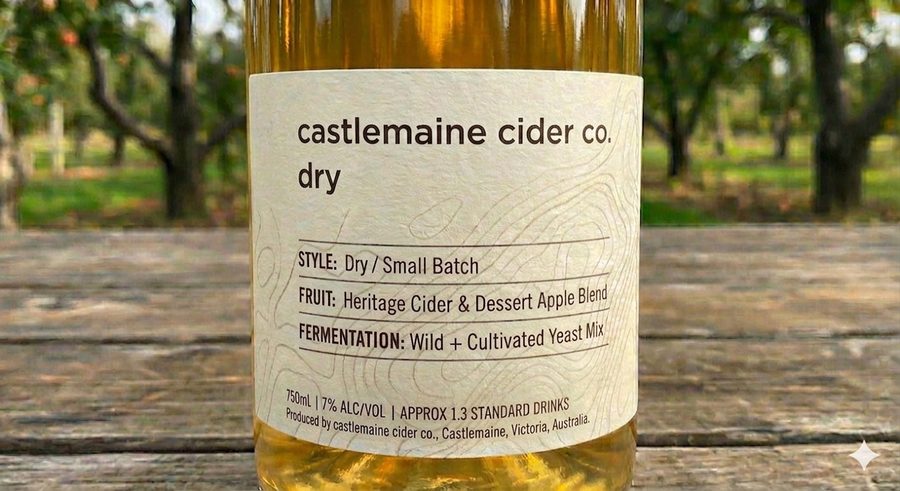
A bottle of Castlemaine Cider Co. Dry standing in the orchard

Our ciders

2025 vintage, all sold out. Join the list to hear about the next release first.

  • 2025 vintageBottled April 2026

    Dry

    Kingston Black, Dabinett, Stoke Red and Huonville Crab. Wild-fermented in tank for ten months, racked twice and bottled unfiltered. Fully dry.

    750 ml · 7.2% alc/vol · 13.2° Brix at harvest

    $34

  • 2025 vintageBottled May 2026

    Farmhouse

    Michelin, Sweet Coppin, Sweet Alford and Frequin Rouge. Wild-fermented and keeved to leave some sweetness, with a little Brettanomyces for tartness and a mild funk. Lightly carbonated, soft tannin, closer to a Belgian saison than most cider.

    750 ml · 5.6% alc/vol · 12.8° Brix at harvest

    $36

  • 2025 vintageBottled March 2026

    Hopped

    Gravenstein, Granny Smith and Kingston Black. Fermented dry, with hops added late for aroma rather than bitterness.

    750 ml · 6.8% alc/vol · 12.1° Brix at harvest

    $32

  • 2025 vintageBottled June 2026

    Heritage

    Kingston Black, Dabinett, Frequin Rouge, Bulmers Norman, Snow Apple and Hoary Morning. Bottle-conditioned, with twelve months on lees. The most complex cider we make. Built to age.

    750 ml · 7.8% alc/vol · 14.1° Brix at harvest

    $42

About us

Around fifteen years ago, I started making cider because it seemed like a cheap and interesting thing to do. I foraged apples. I had no idea what most of the varieties were. Some I guessed at, some stayed mysteries. Over a few years I mapped roughly four hundred feral apple trees across central Victoria: old orchards gone to seed, roadside trees, backyard escapes. One of them, on Harcourt Sutton Grange Road, made particularly good cider. Not too acidic. Some tannin. I think it was a Pink Lady hybrid. It burned in the fires about four years ago and is slowly coming back.

What I kept learning, pressing all that foraged fruit, was that the ferment was where the real work happened. I started experimenting: wild yeast, partial fermentation, oak contact, and eventually brett carried over from lambic brewing I’d been doing in Bendigo. Used in small amounts, Brettanomyces does something to cider that’s hard to get any other way: a tartness and mild funk that sits closer to a good Belgian gueuze or saison than anything you’d normally call cider. I liked that. I still do. It’s quiet in the Farmhouse, but it’s there.

Castlemaine felt right for a young family. The region has a real apple-growing history and a community that takes food and drink seriously. My partner and kids help with the orchard. Everything else is made by hand, in small batches, when it’s ready.

Chris

The orchard

A few years ago we purchased land here in Castlemaine and started planting properly. The varieties came from trees I’d grown in a Bendigo backyard, scions I’d collected from places I trusted, and a long-standing attachment to Kingston Black, a bittersweet apple with a vanillay, slightly unhinged character that changes year to year and never quite repeats itself. I grafted everything, learning from a friend and family members who are horticulturists. Eighteen varieties in the ground now. Most won’t produce meaningfully for another season or two.

Cider apples
Kingston Black, Dabinett, Stoke Red, Sweet Coppin, Sweet Alford, Michelin, Bulmers Norman, Somerset Redstreak, Frequin Rouge, Verite, Huonville Crab
Dessert and dual-purpose
Gravenstein, Snow Apple, Hoary Morning, King David, Granny Smith, Royal Gala, Pink Lady